
Wat Rong Khun, The White Temple in Chiang Rai - Everything you need to know
Written by Pim Meijboom, Co-Founder of PM Tours.
Every time I visit Wat Rong Khun — also known as the White Temple — I see something I hadn’t noticed before. This isn’t just another temple; it’s an evolving art installation with a story behind every sculpture, mirror shard, and design choice. Over the years, we’ve brought thousands of guests here as part of our Chiang Rai tours, and it never fails to impress. In this post, I’ll share everything you need to know before visiting the White Temple — plus tips to make your experience smoother and more meaningful.
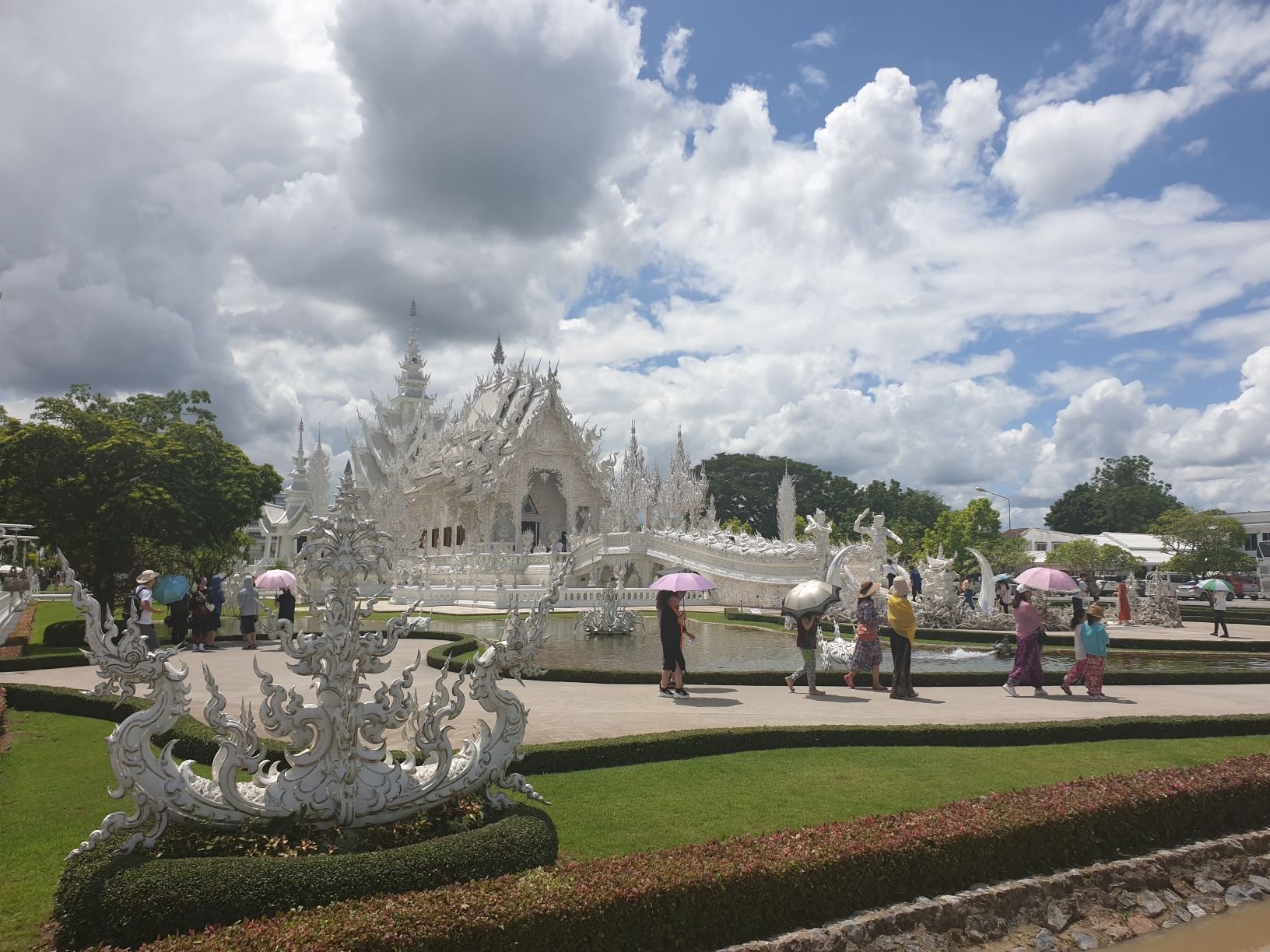
The White Temple in Chiang Rai is on top of the ’things to see’ list for most travelers visiting Thailand. The entrance looks like the gate to heaven with all the white statues and glistening mirrors in the sunlight. But what is this structure exactly? Why is this jaw- dropping Temple here, so far north in Thailand? Read on to learn some interesting information about Wat Rong Khun, the White Temple, to make your visit even more enjoyable.
The Black House
To understand the White Temple, we need to go back in time and look at another famous building in Chiang Rai, the Black House.
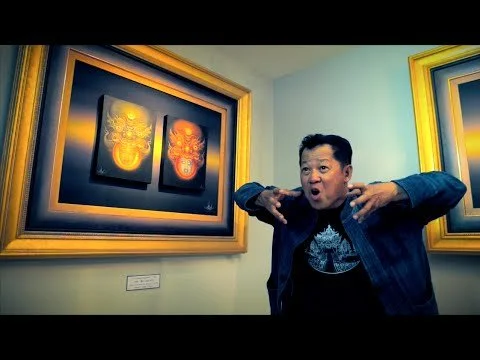
It all started with Chiang Rai artist Thawan Duchanee, famous for his unique artistic style. Thawan was the first engraver to use a new technique. He used a special ballpoint pen to create engravings containing millions of strokes. After working in this way for a while, a doctor suggested that he stop because the way he worked had a disastrous effect on his health. The unique characteristic of Thawan’s paintings included not only form and religious stories but also the colors he used. After learning about Chinese, Indian, and Japanese artworks, he was inspired to paint in black and white to express his inner feelings precisely. Thawan is not only famous for his paintings but also for his architecture. His architectural masterpiece is the Black House in Chiang Rai, which took him 50 years to complete. When visiting this unusual, a bit creepy structure, it feels like you are walking through a vintage fantasy movie. You will find stuffed animals, mysterious paintings, and strange buildings surrounded by peaceful gardens. Baan Dam, or The Black House, was the residence of Thawan for the rest of his life. Thawan Duchanee passed away in 2014.
Visiting Information
The Black House is open daily, from 9 AM – 5 PM.
Foreign visitors have to pay a 100 Baht entrance fee.
Because this isn’t a Temple, there is no dress code.
Some buildings restrict photography inside.
Expect to spend an hour or less at the Black House.
Fun & Interesting Facts
The Black House is an art museum and cultural complex, not a religious site.
It’s called the Black House because of the dominant use of black materials and themes related to death, mystery, and the human psyche.
Some visitors find it unsettling, but it is not designed as a haunted attraction. It is thought-provoking rather than frightening.
Older children may find it interesting, but some exhibits may not be appropriate for very young visitors.
The Black House is not designed to be beautiful in a traditional sense, and that is exactly its power. It challenges visitors to confront uncomfortable ideas about life, death, and humanity, making it one of the most memorable cultural experiences in northern Thailand.


The White Temple
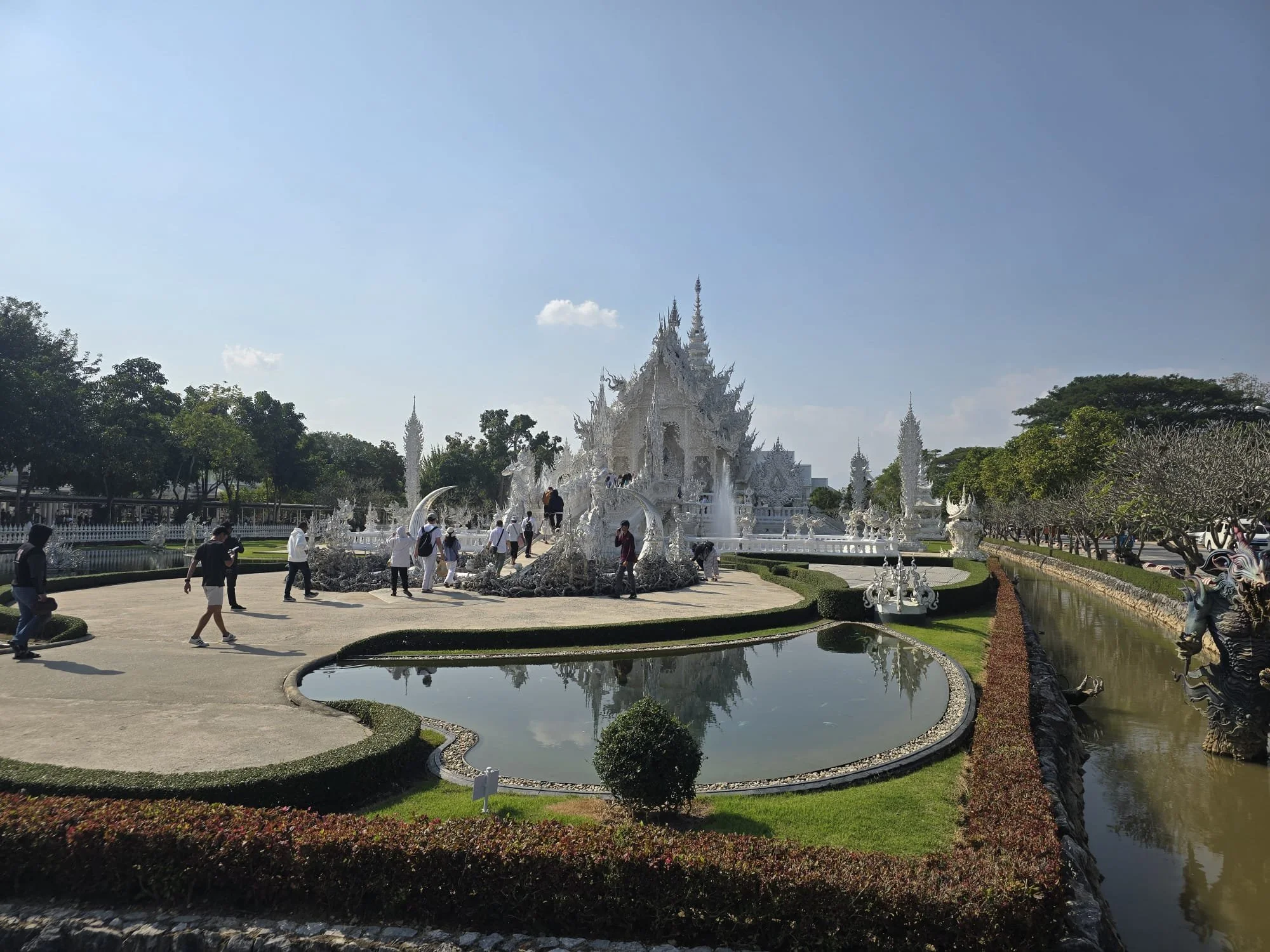
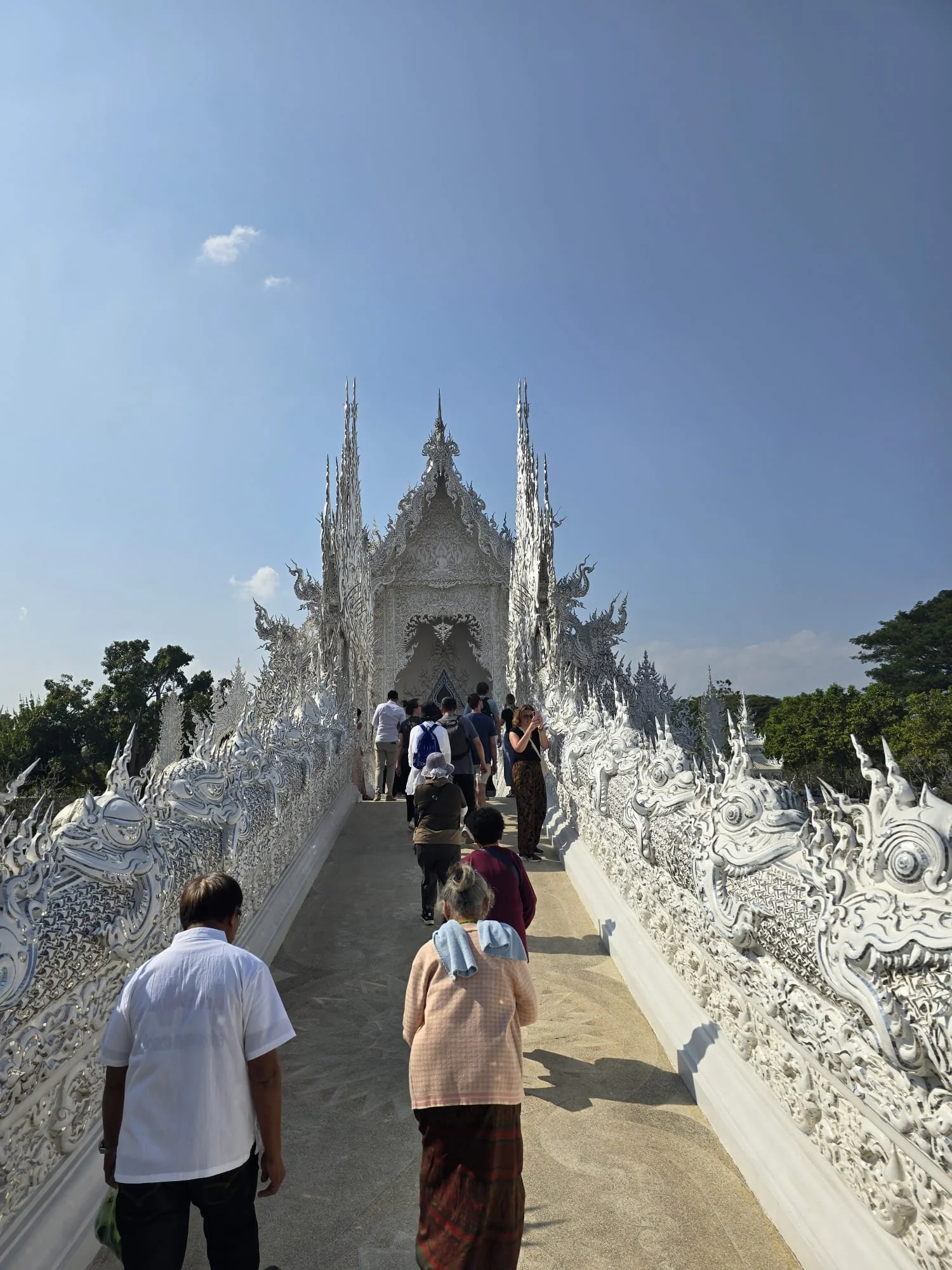
What most people don’t know is that the White Temple, or Wat Rong Khun in Thai, is also an art museum built by another famous Thai Buddhist artist, Chalermchai Kositpipat. He started building this fantastic Temple 25 years ago, and they are still working on it today. His goal is to put Thai Buddhist arts on the international map and to create a place that people from all over the world admire and want to visit, a site like the Taj Mahal in India or Angkor Wat in Cambodia, but then in Thailand. He did succeed with his project, as Wat Rong Khun is one of the most visited attractions in the country. From the outside, the White Temple looks stunning with its thousands of small mirrors shimmering in the sunlight. Everywhere you look, you discover something interesting, like statues, murals, art, and flowers. But it is the inside of the Temple that makes the difference. Nobody expects wall paintings of Michael Jackson, Osama Bin Laden, the Twin Towers, The Matrix, and Spiderman. You can look at his creations for hours and find something new every visit. Chalermchai Kositpipat is not shy about sharing his view on politics and all that is wrong with the world.
While visiting the White Temple, you will have a good chance of seeing Chalermchai and his staff working on the Temple and other buildings in the area. They are constantly renovating, painting, and cleaning the Temple, and adding new parts to this incredible project. He believes that only his death can stop his dreams, but not his ideas, and that the White Temple will give him eternal life. So these structures are not just Temples, and the atmosphere at the White Temple will be very different from that of any other Buddhist Temple in Thailand. But if you are interested in modern architecture and Buddhist art, and want to see something completely different from anything you have ever seen before, then The White Temple and Black House will be a great experience. Insider tip: Even if you don’t have to go, make sure to use the toilet in the White Temple. It is arguably the most beautiful toilet building you have ever seen!
Visiting Information
The White Temple is open daily, from 8 AM – 5 PM.
Foreign visitors have to pay a 100 Baht entrance fee.
Dress modestly. Shoulders and knees should be covered. Sarongs are for rent outside the temple for 50 Baht.
No tank tops, revealing clothing, or torn fabric.
You have to take off your shoes before entering the temple halls. You’ll get a bag to carry your shoes.
Photography inside the ubosot (main hall) is prohibited.
Early morning or late afternoon are the best times to visit. You will miss the crowds on a daytrip from Chiang Mai, and the lightning is fantastic for pictures.
Most people spent about 2 hours at the White Temple.
Fun & Interesting Facts
The White Temple isn’t a traditional historical temple. It’s a modern art creation that functions as both a spiritual site and a cultural installation.
It survived the 2014 and 2025 earthquakes and was repaired without significant structural damage.
The murals inside blend spirituality with commentary on modern life, featuring characters like Spider-Man, Superman, and cultural references.
Construction is expected to continue for many more decades. Like the Sagrada Familia in Barcelona.
The hand sculptures reaching up symbolize worldly desire and suffering, the white color represents purity, and the golden building evokes materialism.


The Blue Temple
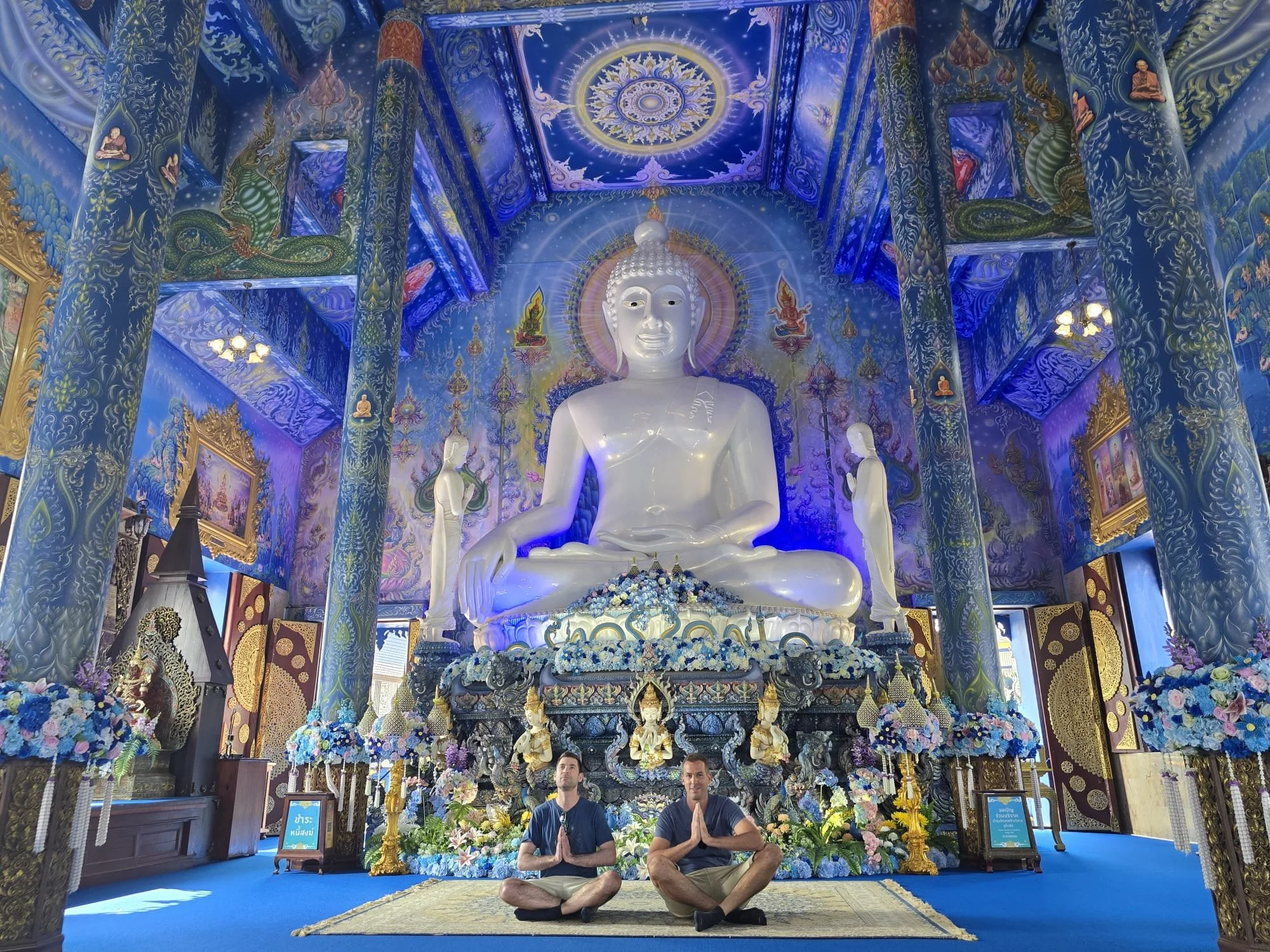
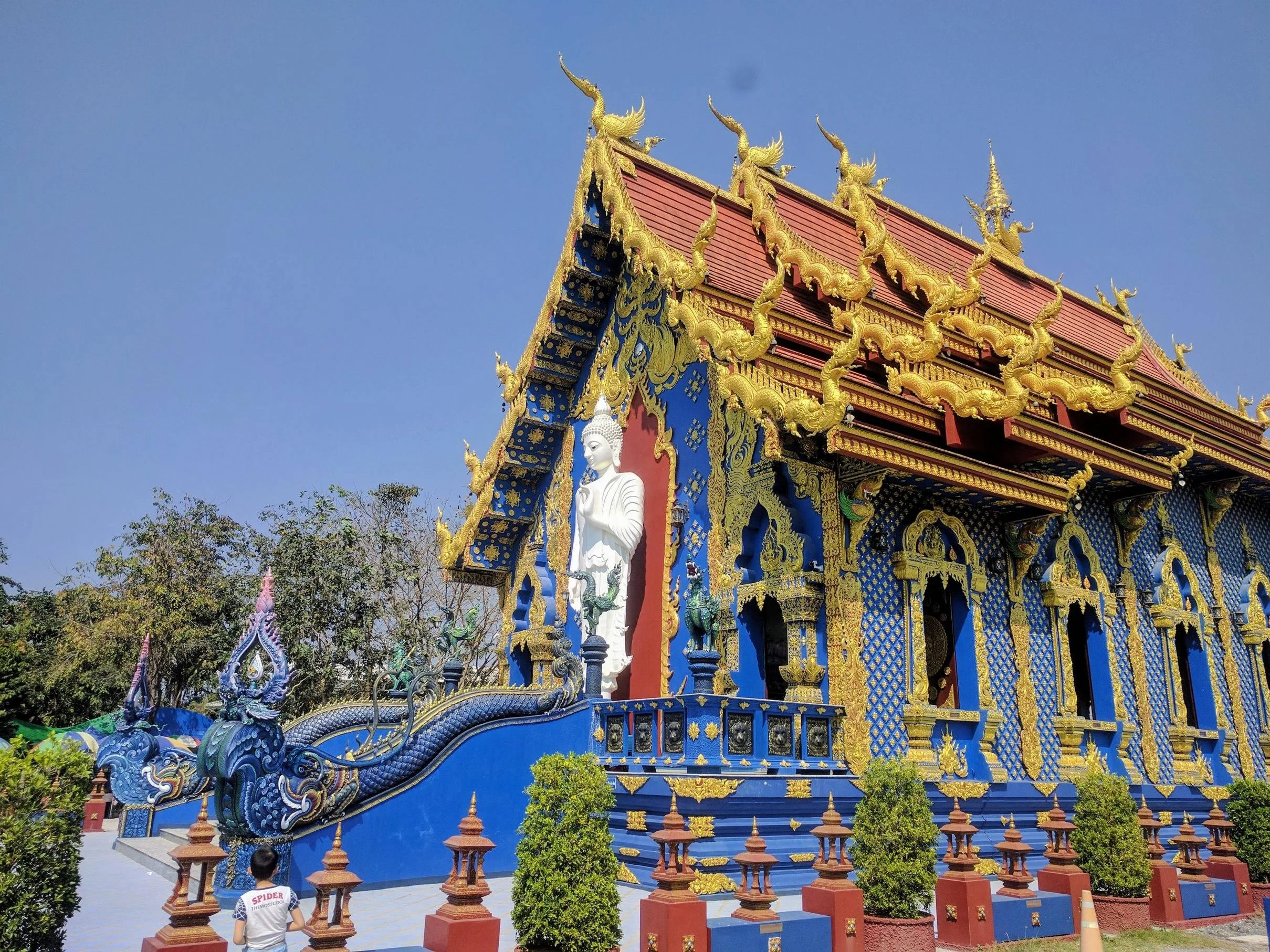
Wait, is there also a Blue Temple in Chiang Rai? Yes, there is. Wat Rong Suea Ten, or the Blue Temple, is the latest colorful Temple in Northern Thailand. Wat Rong Suea Ten translates to "Temple of the Dancing Tigers" in Thai, referring to the Temple's location. In the past, this area was teeming with wildlife. Wild tigers used to bathe in the nearby Kok River. Construction was completed in 2016, just a couple of years ago. The architecture and design are, apart from the color, very similar to those of the White Temple because the designer, Phuttha Kabkaew, is a student of Chalermchai Kositpipat (the Creator of the White Temple). He built the Blue Temple with the help of nearby villagers atop an old temple site to create a space for them to meditate and pray. For me, the Blue Temple was the highlight of the trip to Chiang Rai because it is really in use as a Temple and sees fewer foreign visitors.
Visiting Information
The Blue Temple is open daily, from 7 AM – 8 PM.
The Temple is free of charge, but donations are appreciated.
Like any other temple, please dress modestly. Shoulders and knees should be covered. Sarongs are available for free or a small donation.
You have to take off your shoes before entering the temple buildings.
Photography inside the ubosot is allowed, but please be respectful.
The Blue Temple is still in use for religious rituals, and locals visit to pray, make offerings, and meditate. Please be considerate about this.
Sunset is the best time to visit. Most tourists have left, and the light gives fantastic photo opportunities.
You can spend hours here looking at all the details or just meditating, but most tourists stay here less than an hour.
Fun & Interesting Facts
The intense blue color stands for wisdom, calm, and truth in Buddhism. It is associated with the infinite sky and the depth of meditation.
The Blue Temple is much newer than the White Temple, and was completed just a decade ago.
Entrance is free!
It’s much less crowded compared to the White Temple and feels more authentic because it’s in use for religious purposes.
The Blue Temple is a great place to visit with children. There are many strange and fun statues to find in and around the complex.
You can visit the Blue Temple on a daytrip from Chiang Mai. Check out the links at the bottom of this blog for more information.
Is Chiang Rai worth visiting?
If you are traveling slowly, then it is a good idea to spend a few nights in Chiang Rai. You will have much more time to visit the three temples, and it will also allow you to visit early in the morning or at sunset to avoid the crowds coming in on a day trip from Chiang Mai. Nearby tea and coffee plantations at former opium hotspots Doi Maesalong and Doi Tung are fantastic places to visit on a day trip from Chiang Rai, and the sunrise trek up to Phu Chi Fah mountain will be one of the highlights of your trip to Thailand.
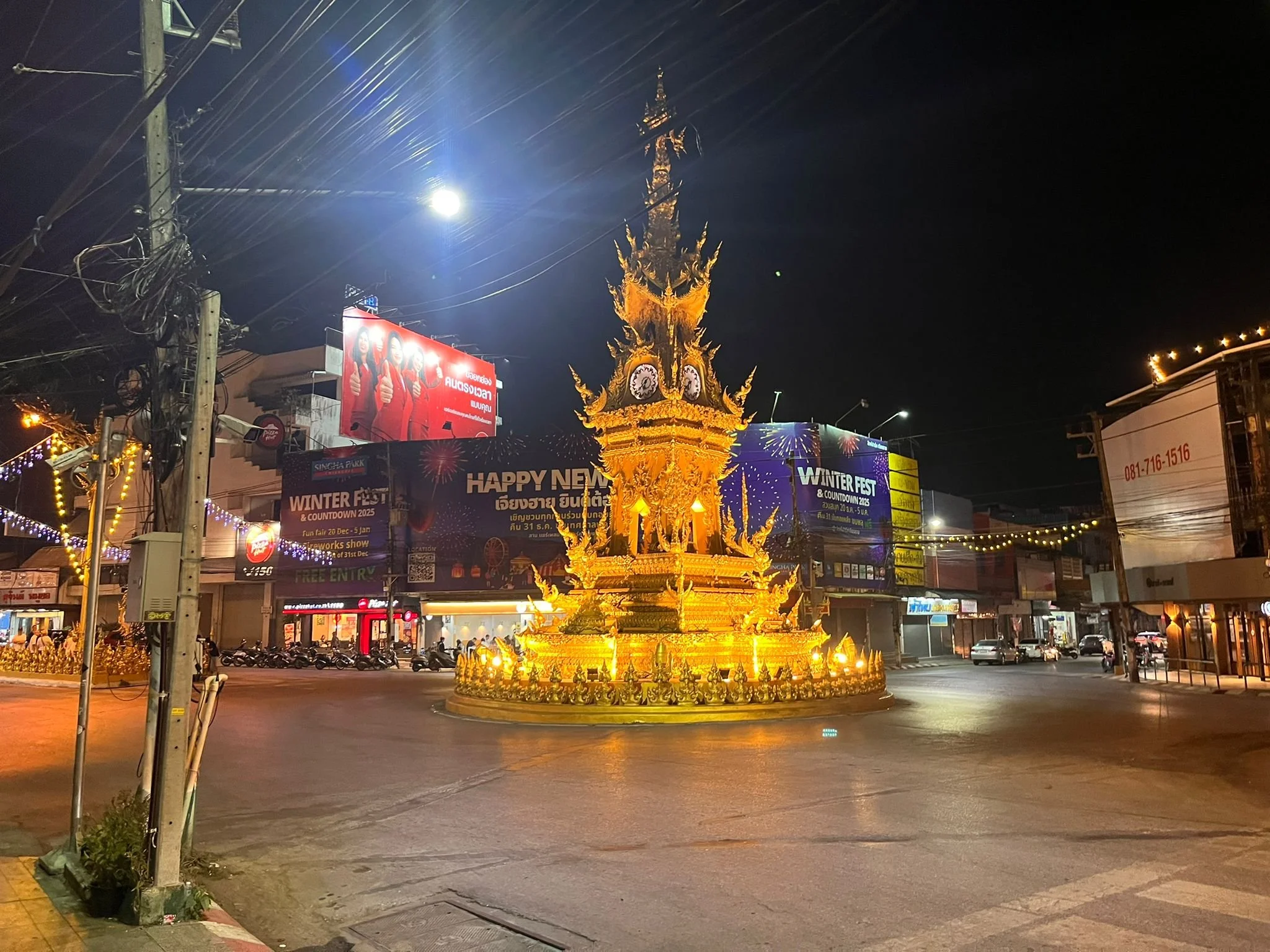
In the evening, you can watch the free light and music show at the clock tower in central Chiang Rai. This show runs every evening at 7, 8, and 9 pm and lasts about 10 minutes. In addition, there are many restaurants and bars in the area of the Clocktower, and ofcourse, the buzzing Chiang Rai nightmarket.
One-day tour to Chiang Rai from Chiang Mai
If you are only visiting Chiang Mai but still want to visit the Temples in Chiang Rai, then it is possible to do it in one day. We offer daily tours from Chiang Mai to visit all the highlights of Chiang Rai in a comfy minivan with an English-speaking guide. Please click the buttons below to view the different options.
We also offer a more extended tour that visits the Golden Triangle, the Myanmar Border Market, and a boat trip on the Mekong River to Laos. Click on the button below to read more about this tour.
If you need transport to Chiang Rai, we recommend using our partner 12GO. You can use the search box below to find all the available options.