
Doi Suthep: the complete guide to Chiang Mai's iconic temple and mountain
Written by Pim Meijboom, cofounder of PM Tours. Doi Suthep is one of those places I never tire of visiting, first time in Chiang Mai or tenth, the mountain and its temple are always worth the trip. Over the years I have helped thousands of travellers explore it, from the early morning monks' chanting to golden sunsets over the city. Here is everything you need to know to visit: how to get there, what to see, the fees, and when to go.
Quick answer: Wat Phra That Doi Suthep is Chiang Mai's most famous temple, sitting on a mountain about 15 km northwest of the Old City, a drive of 30 to 40 minutes. The temple is open daily from around 6:00 AM to 8:00 PM, and foreign visitors pay a 30 THB admission. You reach the golden chedi by climbing the 306 steps of the Naga staircase or by riding the cable car (funicular). Dress modestly, with shoulders and knees covered. Most people spend 2 to 3 hours here, and it is easily combined with the Bhubing Palace, viewpoints, and hill tribe villages further up the mountain.
Doi Suthep: fast facts
Full temple name: Wat Phra That Doi Suthep
Location: Doi Suthep mountain, about 15 km northwest of Chiang Mai Old City (30 to 40 min by road)
Temple opening hours: daily, around 6:00 AM to 8:00 PM
Temple admission (foreigners): 30 THB (free for Thai nationals)
Getting to the chedi: the Naga staircase of 306 steps, or the cable car (funicular)
Cable car: about 20 THB fare; foreigners pay about 50 THB round trip including temple admission
Dress code: shoulders and knees covered; shoes off inside the shrine (wraps available to borrow)
Time needed: 2 to 3 hours for the temple; half a day to add the palace and viewpoints
Best time: early morning (fewest crowds, monks' chanting) or late afternoon for sunset
New for 2025: from 1 October 2025, Doi Suthep National Park charges a nature area fee (100 THB for foreign adults), see below

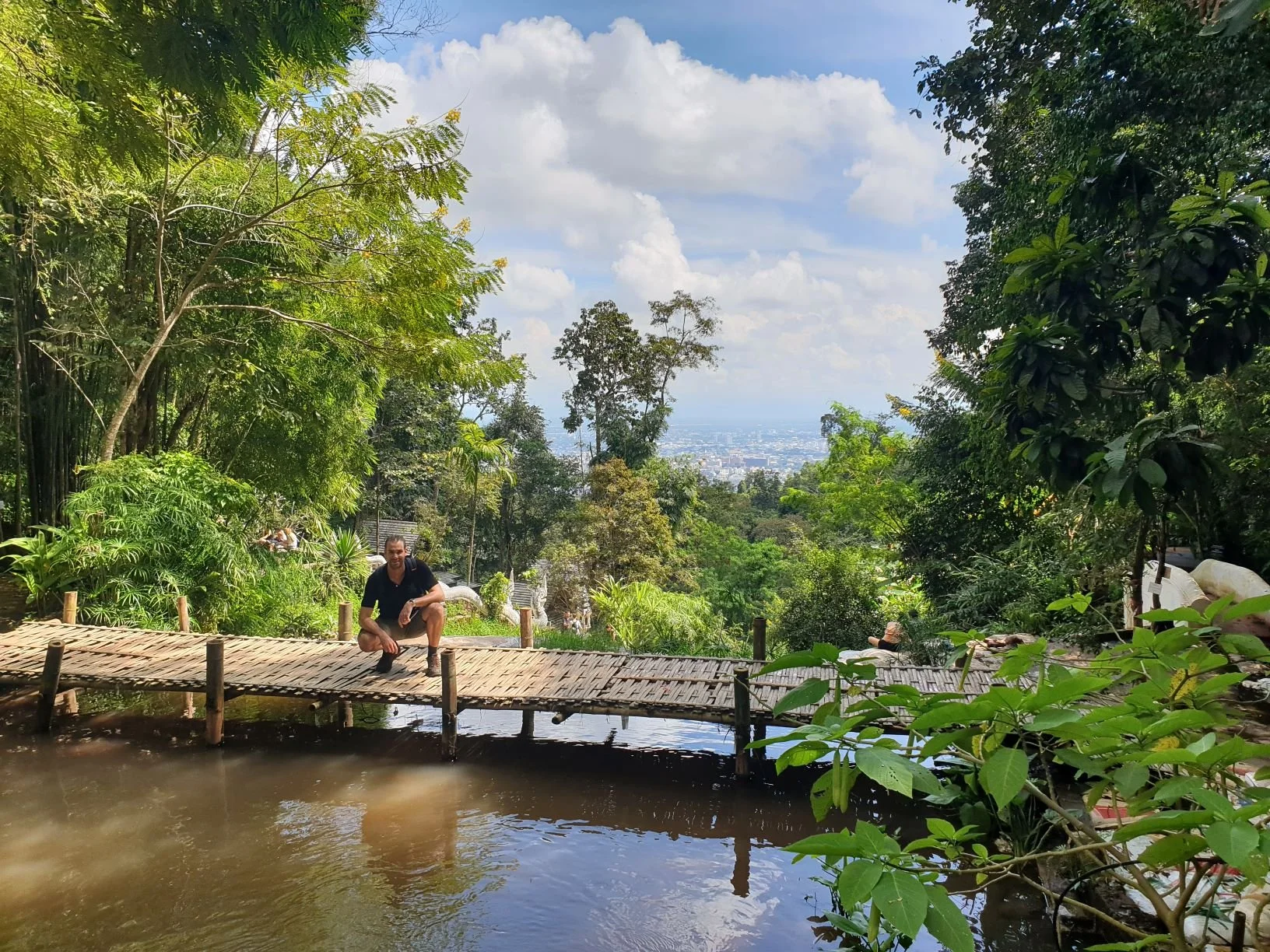

Where is Doi Suthep, and how high is it?
Doi Suthep is the mountain that overlooks Chiang Mai from the northwest, and it gives the whole area its name. The temple, Wat Phra That Doi Suthep, sits partway up the mountain about 15 km from the Old City. Within the surrounding Doi Suthep National Park you will also find waterfalls, jungle nature trails, viewpoints, coffee plantations, a royal palace, and Hmong hill tribe villages, all within roughly a 30 to 45 minute drive of the city.
The highest peak in the park is Doi Pui, at 1,685 metres (5,528 feet). Because of the elevation, the mountain stays noticeably cooler than the city year-round, so it is a comfortable escape from the heat. In the cool season (roughly December to February) it can get genuinely chilly near the top, so bring a light sweater. Late January also brings the Sakura (wild Himalayan cherry) blossom near Doi Pui, a popular photo spot with Thai visitors.
Wat Phra That Doi Suthep: the temple
Wat Phra That Doi Suthep is the main reason most people make the trip. It is one of the holiest Buddhist sites in northern Thailand and an active pilgrimage destination, especially on the Buddhist holidays of Visakha Bucha and Makha Bucha. Legend places its founding in 1383, when a sacred white elephant is said to have carried a Buddha relic up the mountain and stopped at the spot where the temple now stands.
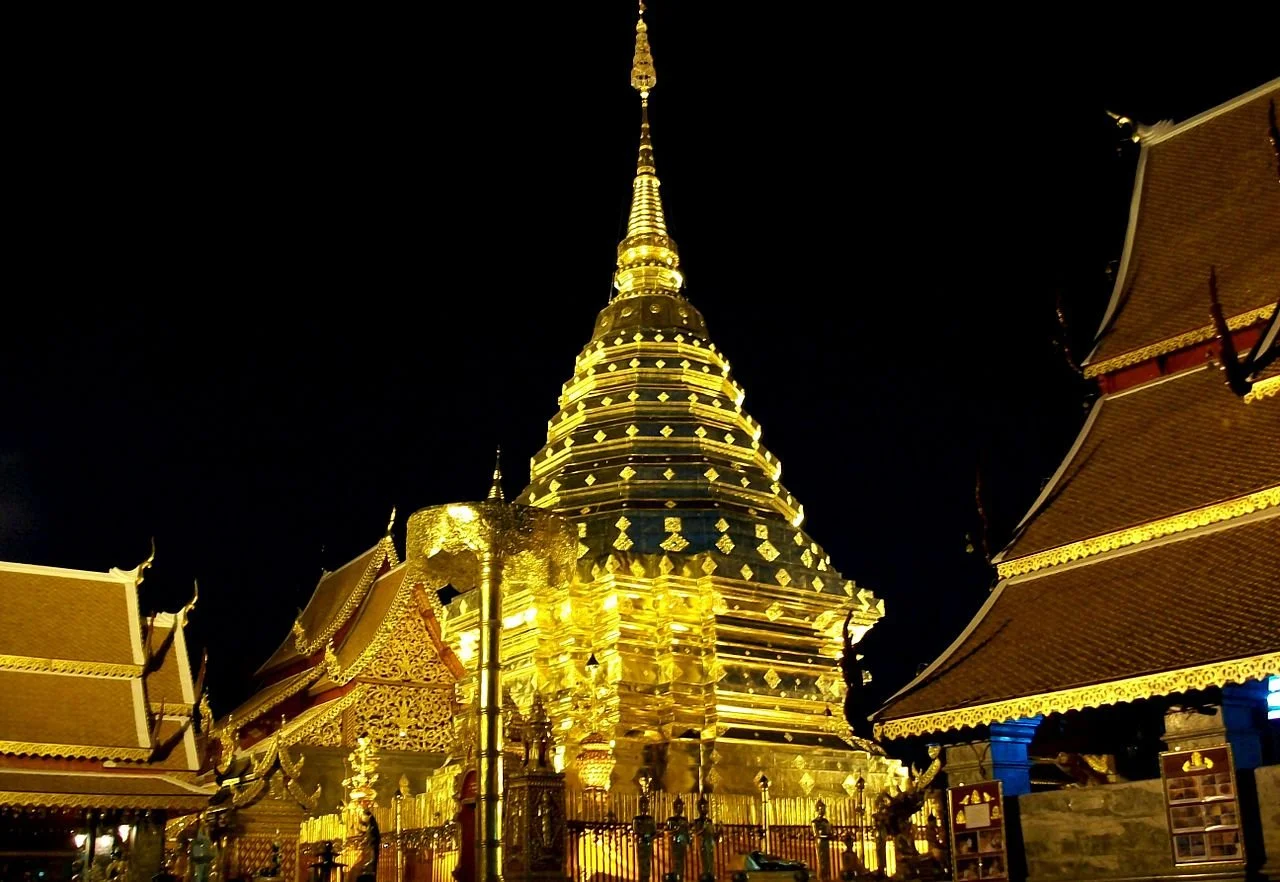
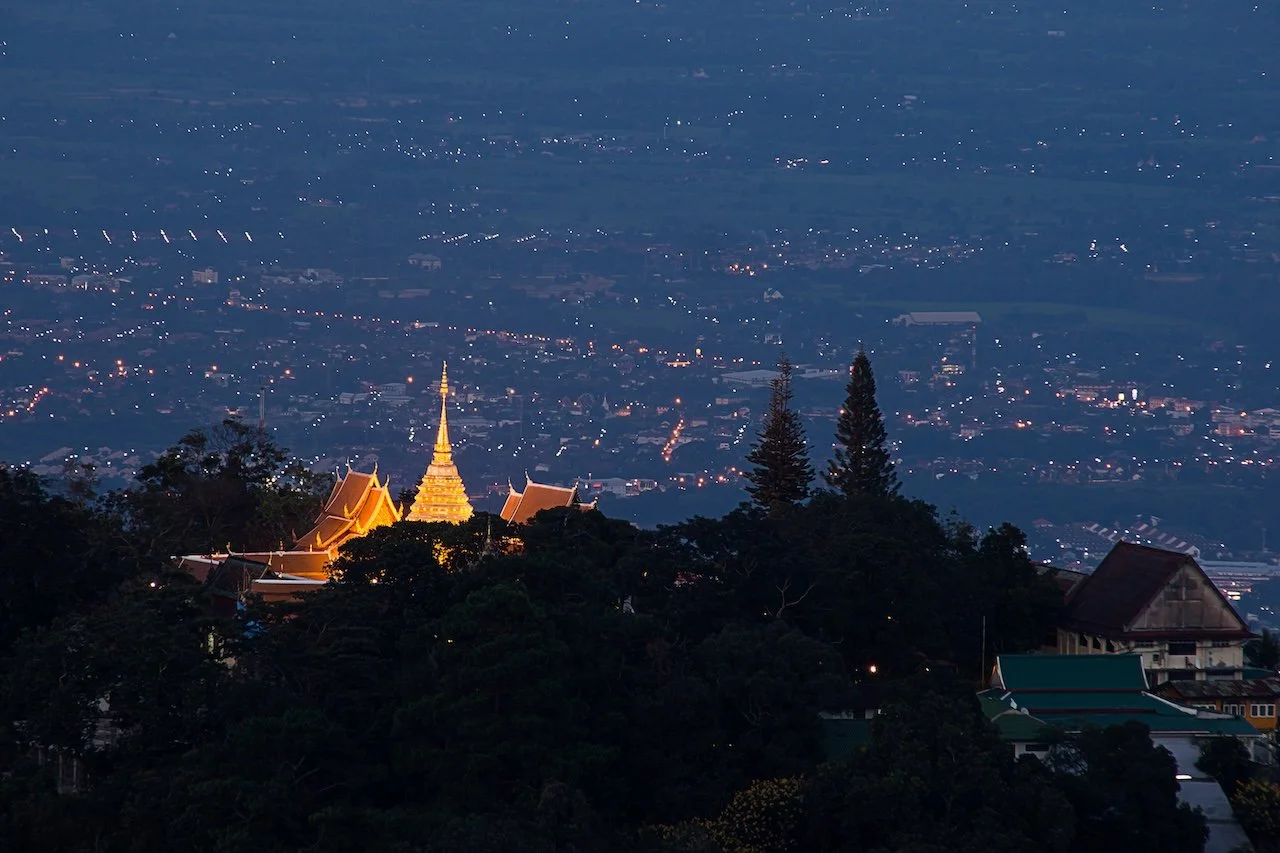
The centrepiece is the golden chedi, a gilded monument roughly 24 metres (about 79 feet) tall that reflects the sun by day and glows above the city at night. From the temple terrace you get a sweeping panorama over Chiang Mai and, on a clear day, all the way to the airport. There is also an International Buddhism centre on the grounds offering meditation courses.


Is there an entrance fee for Doi Suthep?
Yes. Foreign visitors pay a 30 THB temple admission fee to enter Wat Phra That Doi Suthep (Thai nationals enter free). Parking is generally free.
New for 2025, the national park fee: since 1 October 2025, Doi Suthep National Park charges a separate entrance fee for its nature areas, including the Pha Lat nature trail, Huai Kaew Waterfall, and Doi Pui, of 100 THB for foreign adults (50 THB for children). Importantly, visiting Wat Phra That Doi Suthep and Wat Pha Lat by the main road is not subject to this park fee, only the temple's own 30 THB admission applies. If you plan to hike the trails or visit the waterfalls, budget for the park fee too. Fees can change, so carry cash and confirm on arrival.
What are the opening hours?
The temple is generally open daily from around 6:00 AM to 8:00 PM. The cable car and ticket counters typically run from about 6:00 AM to 6:00 PM. Arriving at opening time gives you the coolest weather, the softest light, and the temple close to empty.
The 306 steps or the cable car
There are two ways up to the chedi from the road:
The Naga staircase, 306 steps flanked by guardian nagas, the mythical serpents that give the staircase its name. It is free, it is beautiful, and it is the traditional approach, but it is a real climb.
The cable car (funicular), a tram that works like a lift and carries you straight up. The fare is around 20 THB. Foreigners pay roughly 50 THB round trip, which already includes the 30 THB temple admission.
If you are travelling with young children, older relatives, or anyone with mobility issues, the cable car is well worth it. Otherwise the stairs are part of the experience.
What to wear: the Doi Suthep dress code
Wat Phra That Doi Suthep is an active place of worship, so modest dress is required. Cover your shoulders and knees, with no vests, tank tops, short shorts, or short skirts. You will also need to remove your shoes before entering the inner shrine area, and shoe racks are provided. If you arrive underdressed, wraps or sarongs are usually available to borrow or rent near the entrance. The same modest dress applies at the Bhubing Palace.
The Monk's Trail (Pilgrims' Path)
One of my favourite ways to reach the temple is on foot, via the Monk's Trail, the pilgrimage path still used by monks today. It is a steep climb of roughly 5 km, with a beautiful halfway stop at Wat Pha Lat, a tranquil temple hidden in the forest beside a stream. There is a stall selling drinks partway, but bring plenty of your own water. The offline app Maps.me works well for finding the trailhead. On the way back down from the summit you can flag a red songthaew to the city. Note that since October 2025 the Pha Lat nature trail section may fall under the park's nature area fee, so carry cash just in case.
Bhubing Palace (Phuping Palace)
Higher up the mountain is Bhubing Palace (also spelled Phuping), the royal winter residence, built in 1961. When the royal family is not staying, the palace gardens open to the public, a beautifully landscaped spot with a teak pavilion, a fern garden, and rose gardens. Entrance is around 50 THB, the same modest dress code applies, and the palace closes to visitors when the royal family is in residence (often in the cool season), so check before you go.
Waterfalls around Doi Suthep
The mountain and surrounding park have several accessible waterfalls with pools for a swim:
Huay Kaew Waterfall, the easiest to reach, at the foot of the mountain just west of the Chiang Mai Zoo.
Monthathan Waterfall, on the way up toward the temple, with a lovely pool for a dip on a hot day.
Mae Sa Waterfall, a favourite with several tiers in the Mae Rim area (drive north, turn near the Tiger Kingdom). A national park entrance fee applies (around 100 THB for foreigners).
The best time for the waterfalls is the rainy season into the early cool season (roughly June to December), when the water is flowing strongly. In the hot, dry months (roughly January to May) some smaller falls dry up. For more options, see our guide to the top 10 waterfalls in Chiang Mai, including the famous Sticky Waterfall.
Food, coffee, and villages on the mountain
Around the temple you will find food stalls and small restaurants, and the Hmong village sells handmade clothing, scarves, and souvenirs. Do not miss a coffee at the plantation near the Hmong village of Baan Khun Chang Khian. Relaxing on the wooden balcony above the coffee terraces is a genuine highlight. If you want to stay overnight, there is a campsite near the Hmong village (tents and gear for rent, with facilities) and basic wooden bungalows near the coffee plantation.


How to get to Doi Suthep
The drive takes about 30 to 40 minutes up a good, winding road. Your options:
Songthaew (red truck)
Rough cost: about 40 to 50 THB per person one way
Best for: Budget travellers
Notes: Depart from Chang Phuak Gate or near the Zoo, and leave once about 10 passengers are aboard. Go around 10 AM for a quick departure.
Songthaew (private charter)
Rough cost: about 800 THB round trip
Best for: Small groups
Notes: Driver waits and brings you back, good value for 2 or more people.
Rented motorbike
Rough cost: from about 200 THB per day
Best for: Confident, licensed riders
Notes: Roads are good and well signposted. Wear a helmet and carry an international licence.
Guided tour
Rough cost: see below
Best for: Stress-free, added context
Notes: Transport, guide, and a set itinerary are handled for you.
Doi Suthep tours with PM Tours
We run two tours to Doi Suthep, each with a different feel.
Doi Suthep by Night
An evening tour that first visits Wat Umong at the base of the mountain, a temple around 700 years old and famous for the meditation tunnels running beneath it, before heading up to Wat Phra That Doi Suthep. Seeing the golden chedi and the city lights after dark, with almost no other tourists around, is something special.
Price: 800 THB
Doi Suthep and Sticky Waterfalls tour
A full daytime tour combining Wat Phra That Doi Suthep, a short hike to the hidden forest temple Wat Pha Lat, and an orchid and butterfly farm, followed by a Thai lunch and an afternoon climbing the famous Sticky Waterfalls (Bua Tong).
Price: 2,000 THB
Frequently asked questions
-
Foreign visitors pay 30 THB to enter Wat Phra That Doi Suthep (free for Thai nationals). Since 1 October 2025, a separate national park fee (100 THB for foreign adults) applies to the park's nature areas and waterfalls, but not to visiting the temple by the main road.
-
The temple is open daily from about 6:00 AM to 8:00 PM. The cable car and ticket counters generally run 6:00 AM to 6:00 PM.
-
By red songthaew from Chang Phuak Gate or near the Zoo (about 40 to 50 THB per person), by rented motorbike, or on a guided tour. The drive takes 30 to 40 minutes.
-
The Naga staircase has 306 steps. If you would rather not climb, a cable car (funicular) takes you to the top.
-
Cover your shoulders and knees, and remove your shoes before entering the shrine. Wraps are usually available to borrow near the entrance.
-
Allow 2 to 3 hours for the temple and viewpoint, or half a day to add the Bhubing Palace and mountain viewpoints.
-
Early morning for the coolest weather, fewest crowds, and monks' chanting, or late afternoon for sunset over the city.
-
Yes. The temple stays open into the evening, the golden chedi is lit, and the city view after dark is stunning. Our Doi Suthep by Night tour is built around exactly this.
About the author: Pim Meijboom is a cofounder of PM Tours, a tour operator based in Chiang Mai and licensed by the Tourism Authority of Thailand (TAT License 24/00757), specialising in guided temple, trekking, and nature tours across Northern Thailand.